
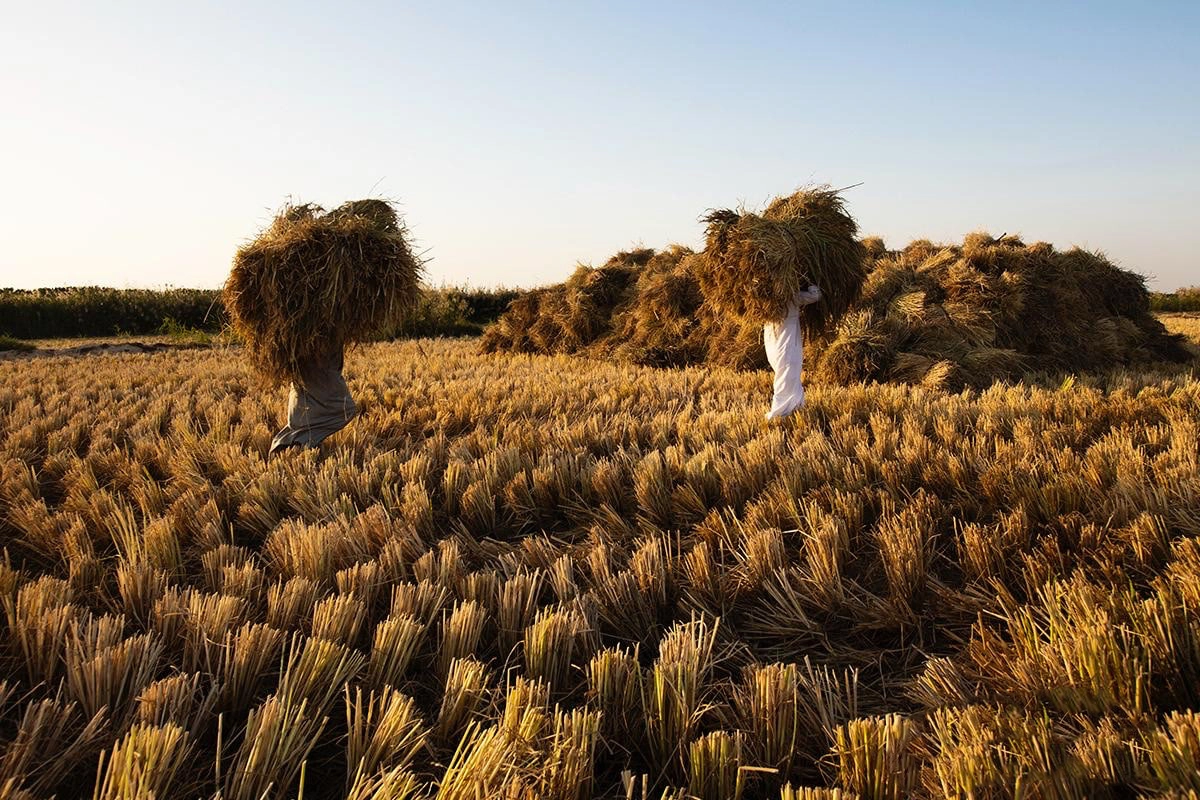
History of Hasawi Rice
Al-Ahsa is considered one of the most famous regions in the world historically known for cultivating dates and Hasawi rice (locally called Al-Ansaaʿ). It is regarded as one of the most fertile agricultural lands in the world, thanks to its rich soil. The palm groves of Al-Ahsa include more than two million palm trees, owned by over 25,000 farmers. Al-Ahsa is recognized as one of the largest oases in the world according to the Guinness Book of World Records.
The region is also renowned for growing Hasawi rice, which is considered one of the oldest and finest types of rice, holding a special place in local heritage. Its cultivation is closely linked to the date harvest season, as it is planted after the collection of ripe dates (rutab).
Al-Ahsa is located on the coast of the Arabian Gulf, near the historic port of Uqair. This supports the belief that the origin of Hasawi rice traces back to the East, particularly to regions such as India and China — a theory further confirmed by scientific and academic research that studied the historical roots of rice and found its origin in these areas.
Hasawi rice belongs to the category of heat-loving plants that thrive in hot and humid regions, tolerating temperatures up to 48°C. It is characterized by its strength and its ability to withstand high salinity levels in water up to 48°C. Growing Hasawi rice requires great care and large amounts of water, starting from planting until harvest.
The lands designated for its cultivation are specially prepared, as they must be flooded and kept consistently irrigated to ensure proper growth and prevent the soil from drying out. Hasawi rice is distinguished by its reddish color, high productivity, and strong adaptability, making it superior to many other types of rice.